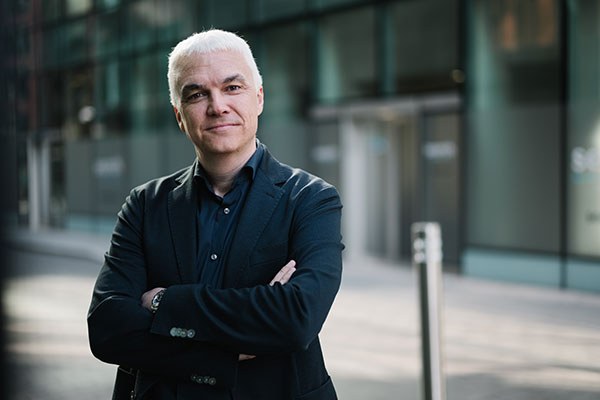
CEO Craig Scott on how Hill Dickinson assessed Everton’s stadium naming rights opportunity
Understanding why sponsors choose stadium naming rights is critical for clubs seeking long-term partners. While headline deal values attract attention, the motivations behind a sponsor’s decision often reveal far more about how naming rights propositions should be shaped and sold.
As part of The Sponsor's recently published report covering the fair market values of 75 major European stadium naming rights, we spoke to Craig Scott, CEO of Hill Dickinson, the naming-rights partner of Everton’s new Hill Dickinson Stadium in Liverpool, to understand what ultimately made the deal compelling from a sponsor’s perspective.
Impact and Longevity
For Hill Dickinson, the appeal of stadium naming rights lay in the scale and permanence of the asset, rather than exposure alone.
“The chance to sponsor the new stadium represented a genuine once-in-a-generation opportunity,” Scott explains. “Not just for us as a locally headquartered international business, but also for the city of Liverpool.”
What differentiated the stadium from alternatives such as shirt sponsorship or training ground partnerships was its role beyond football.
“The stadium is not just the newest Premier League ground,” Scott says. “It is designed to be a multi-purpose events venue and the centrepiece and catalyst for a much broader £1bn programme of regeneration and investment planned across the North Liverpool docks area.”
While Premier League reach was important, Scott stresses that wider impact mattered just as much.
“Thinking beyond the benefits of the huge global reach that Premier League coverage can provide, it was important that we were involved in something genuinely transformational,” he says. “Something that could support our future growth while creating new investment and jobs in the city where we’ve been headquartered for over 200 years.”
The stadium’s multi-use design further strengthened the case.
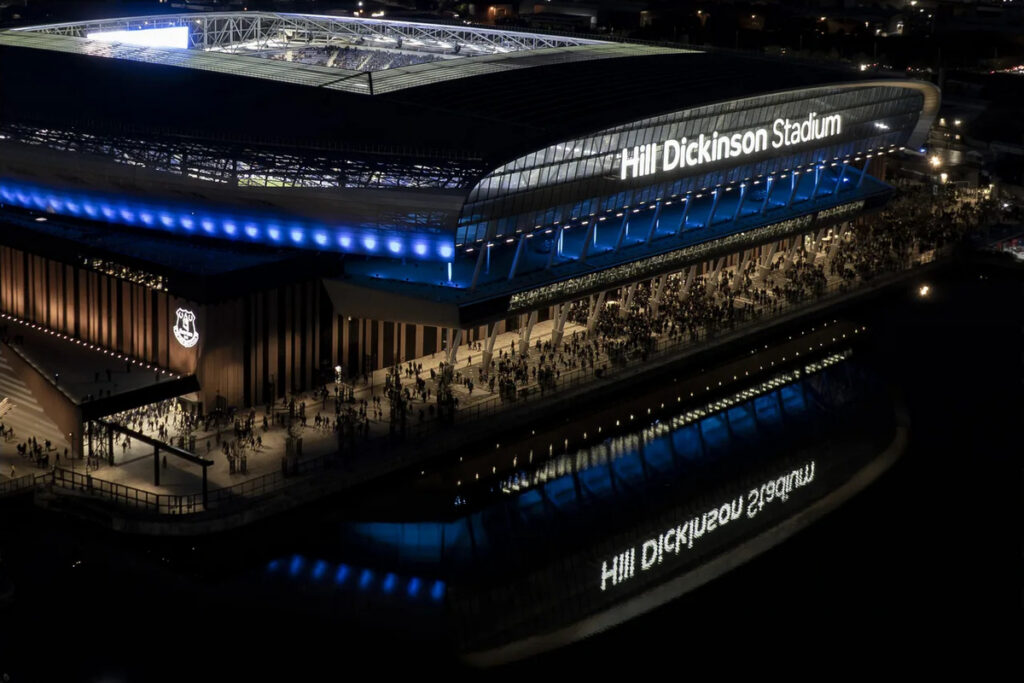
“Holding the naming rights means we are exposed to a much broader global audience beyond the Premier League, including international sports, music tours and cultural events,” Scott adds.
The fact that it is a new stadium also reduced brand risk. “It reduces the risk of it coming to be known by something else.”
Strategic Fit
“The first thing we had to consider was whether it would be an authentic fit for us,” explains Scott. “It is very hard for one large law firm to stand out from another, but this opportunity allowed us to do something genuinely distinctive.”
That authenticity was grounded in history and geography.
“Many people would not have been aware that there is a unique connection in the DNA of Hill Dickinson, Everton and the docks of Liverpool,” Scott says.
He traces that link back to Everton’s formation.
“Will Cuff, a former president of the club, co-founded a Liverpool law firm that eventually became part of Hill Dickinson. Several of that firm’s partners still work here today.”
The firm’s maritime heritage also played a role.
“We have a long and rich history linked to Liverpool’s waterfront dating back to 1810, including acting for White Star Line during the Titanic disaster inquiry proceedings.”
For Hill Dickinson, these connections made the partnership credible internally and externally, helping justify a level of commitment that went beyond a conventional sponsorship.
Perfect Timing
“It was opportune timing for us. We were planning a significant refresh of our brand to help us better stand out in a congested legal market.”
The stadium partnership provided a platform to support that shift.
“The stadium-related coverage for our new brand has already significantly increased our share of voice and provided a platform to activate the new brand,” Scott explains.
The decision also aligned with the firm’s international ambitions.
“We’re seeing a significant uptick in awareness amongst international audiences, especially in the US and Asia,” he says.
For clubs, this underlines the importance of knowing prospects in detail: their business lifecycle, challenges, ambitions and target markets.
The Mechanics
“We were approached by Everton and their agents, rather than the other way around,” Scott confirms.
While the club had other options, alignment proved central.
“It became very clear the club valued partnering with a business that had a genuine local connection, a strong global outlook, and shared ambitions around regeneration and community impact.”
Community purpose reinforced that alignment.
“The more we spoke, the more we shared a common purpose around supporting the regeneration of the area surrounding the stadium,” Scott says. “Our charitable foundation and Everton’s community work meant we could do more together than we could alone.”
Once a partnership structure was agreed, internal approval followed.
“We needed majority approval from over 170 partners across the firm,” Scott notes. “It speaks to the ambition of the business that they overwhelmingly backed us.”
Early Impact and Outcomes
Although conceived primarily as a brand awareness play, Scott says commercial impact has arrived sooner than expected.
“We hadn’t expected to see related instructions land so quickly, but they have already started to materialise,” he explains.
That includes work directly connected to the club.
“We have already undertaken our first work for the club and its ownership group,” he says, alongside enquiries from other football clubs and brands in sports including rugby and the NBA.
Internally, the response has been equally notable.
“The level of interest and enthusiasm for matchday visits and stadium tours has been phenomenal,” Scott says. “That enthusiasm has also shown up in recruitment, with a marked increase in the number of lawyers wanting to join us since the sponsorship was announced.”
Leading with Purpose
“Any sponsorship has to have a purpose that aligns with what you are trying to achieve as a business. This opportunity matched our desire to celebrate our heritage while providing a unique platform to grow into new markets.”
For clubs, Hill Dickinson’s experience highlights a simple but often overlooked truth: stadium naming rights decisions are driven as much by authenticity, timing and strategic alignment as by audience scale or headline price.
Understanding those motivations is what turns a naming-rights opportunity into a partnership a sponsor is willing to commit to for the long term.