
How challenger brands can use sponsorship to step up
The marketing tactics that build a challenger brand aren't necessarily the ones that will turn it into a serious category competitor.
Early growth is often built by winning over a relatively small group of customers. Challengers find an audience underserved by established competitors, give them a compelling reason to switch and, if they get it right, turn some of those early customers into advocates. The problem comes when challenger brands need to scale up.
"Almost all challengers eventually reach a point where that approach must evolve," explains Adam Raincock, Co-Founder of The Space Between. "To scale, they need to build awareness with a broader audience. It's often at this moment that sponsorship enters the conversation."
From depth to scale
There is no shortage of ways to buy reach. The more difficult challenge is earning attention. There is a limit to how much content any one person can consume, but the volume competing for their attention continues to grow. For brands trying to reach new audiences, that makes attention increasingly difficult to earn.
"Sponsorship allows brands to grow by harnessing attention around something people genuinely care about," says Raincock. "Unlike short advertising bursts, sponsorship is often season-long, allowing brands to build familiarity and meaning over time."
Sport is particularly powerful because audiences don't simply consume it. They follow it, discuss it, identify with it and come back to it repeatedly. As Raincock puts it: "It's live, emotional and culturally relevant, which makes sponsorship a powerful way for brands to stop the scroll."
That combination of scale and attention can make sponsorship particularly valuable for a challenger trying to become a mainstream brand.
Challengers don't necessarily need challenger sports
There is an obvious temptation for challenger brands entering sponsorship to find a challenger property. Emerging leagues, disruptive formats and fast-growing sports often share many of the characteristics challenger brands see in themselves. They are ambitious, unconventional and trying to take market share from established competitors.
But sharing a challenger mentality doesn't necessarily make them the right commercial partner.
"The temptation for challenger brands is to partner with a disruptor league or sport," explains Raincock. "The logic is obvious: both share a similar mindset and position themselves against more established competitors. But it comes with risk."
If the marketing challenge is moving beyond a niche audience, partnering with an established property may provide precisely the scale the brand is missing.
"Challenger brands often believe that what got us here won't get us there," says Raincock. "That's why they often focus on established properties that already have scale and cultural relevance."
But acquiring access to that scale and actually reaching it are two very different things.
Buying an audience doesn't mean reaching it
A sponsorship might provide theoretical access to millions of fans, but that doesn't mean millions of fans will ever encounter the brand.
Research by The Space Between found that sponsorship activated through rights holders' digital channels can reach, on average, just 23% of a sport's total audience. With organic social reach factored in, the proportion of fans actually seeing sponsorship content can be considerably lower.
The agency calls this the Sponsorship Gap: the difference between the total audience theoretically available through a sponsorship and the audience a brand actually reaches.
The challenge is compounded by the way sports fans now consume content. Audiences are increasingly fragmented across rights holders, publishers, creators and social platforms, while around 60% of the content people consume comes from accounts they do not follow. As Adam points out, relying on a single large social channel is therefore unlikely to be enough to reach the breadth of audience a sponsorship promises.
For a challenger investing in sponsorship specifically to reach beyond its existing customer base, that's a significant problem. It also means brands cannot rely on the rights holder's channels alone to deliver the scale they bought the sponsorship to achieve.
Closing that gap requires brands to think about distribution as part of their activation strategy: identifying which parts of the fanbase they are failing to reach, where those audiences consume content, and then using a combination of creators, publishers and paid media to reach them.
This approach led The Space Between to develop Cascade, its amplification model designed to help sponsors identify and reach those missing audiences.
The sponsorship isn't the campaign
Another common mistake among brands entering sponsorship for the first time is believing the hard work is done when the contract is signed.
"Even in 2026 many first-time sponsors still see the deal as the solution rather than the opportunity – believing that once the contract is signed, the rest will take care of itself," says Raincock.
That misunderstanding becomes particularly problematic when brands attempt to apply the same performance-marketing logic that may have driven their earlier growth. "I regularly hear the same story: 'We signed the deal, ran some performance marketing and we're not seeing the sales spike.' Sponsorship doesn't work like that."
Treating fans simply as a new pool of prospects to convert risks stripping away much of what makes sponsorship valuable in the first place.
"If the instinct is to immediately sell to a fanbase, it quickly becomes a very expensive way to acquire customers," says Raincock. "The real opportunity lies in doing both: building brand affinity with fans over time while creating the right commercial opportunities for them to become customers."
In Raincock's words: "In sponsorship, it's rarely brand or performance. It's both."
Different ways to punch above your weight
For challengers competing against incumbents with deeper pockets, success doesn't necessarily come from matching their spending. It can come from finding a role within a property that makes the brand disproportionately relevant.
Xero faced exactly that challenge in the UK accounting software market. It was competing against larger, established rivals while suffering from relatively low awareness among small-business owners.
Its partnership with the Lionesses gave the brand a platform to focus its marketing, turning the tournament into a defining brand moment rather than treating the sponsorship as a standalone media asset. The result was a significant increase in brand equity among UK small-business owners, reaching a record high for Xero while the wider category declined.
Metro Bank has taken a different approach. Competing against some of Britain's largest and longest-established financial institutions, the challenger bank could never win simply by trying to be more visible than its rivals.
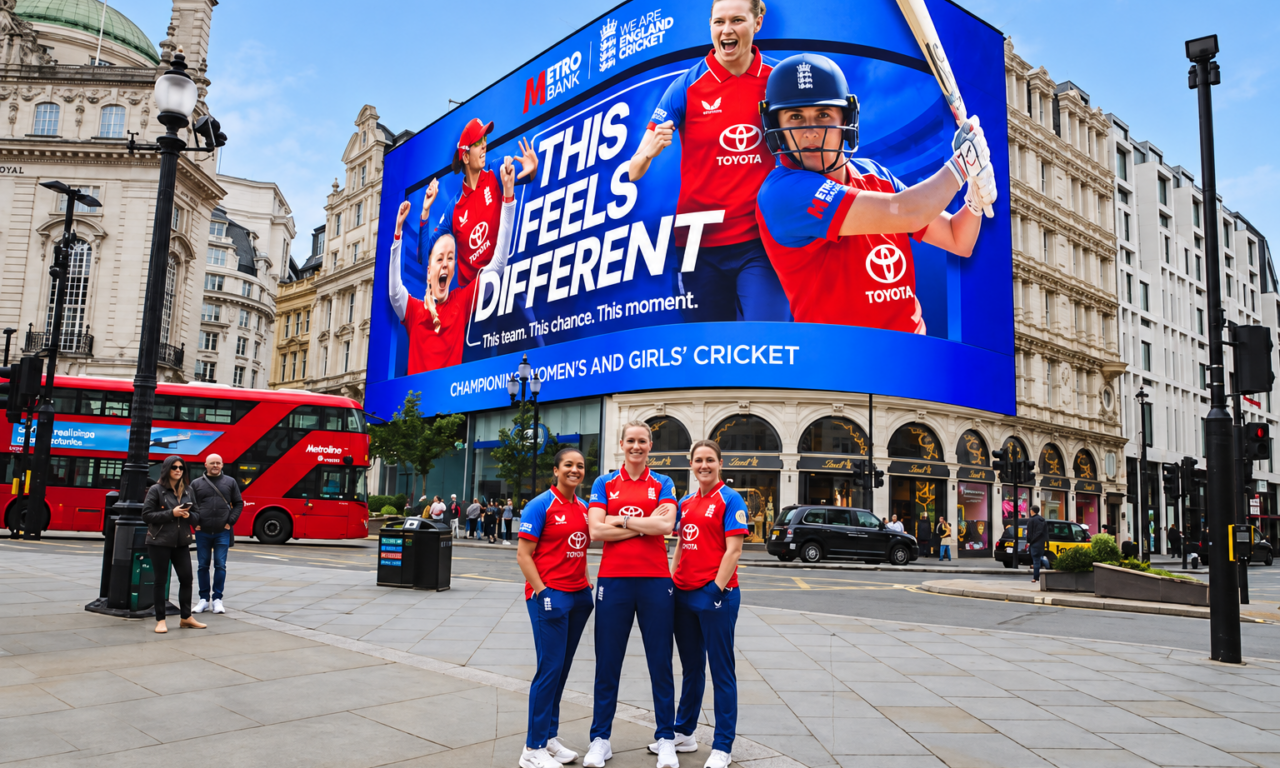
Its partnership with the England and Wales Cricket Board instead gives Metro Bank a role within the growth of the game. Alongside its association with the England women's and girls' teams and domestic cricket, the partnership includes extensive support designed to increase participation and grow women's and girls' cricket across the country.
The two approaches are different, but the principle connecting them is the same. Xero used sponsorship to create a concentrated moment that could accelerate awareness, while Metro Bank is using its partnership to build relevance by contributing to an area of the sport with significant growth potential.
Neither requires the challenger to behave like the incumbent.
A platform for growth
Sponsorship won't turn a challenger into a category leader simply because its logo appears alongside a major sport, team or athlete. Its value lies in giving growing brands access to attention, scale and cultural relevance at precisely the point when the marketing strategies that built the business begin to reach their limits.
But the rights are only the starting point. The challenger still has to reach the audience, earn its place within the property and give fans a reason to care that it is there.
The challenger may not be able to outspend the category leader, but sponsorship can give it an opportunity to outthink them.