Lidl and UEFA: When a sponsorship works, have the conviction to go all in
A partnership that's truly aligned and delivering fully against brand objectives is hard to find. If you're lucky enough to achieve one, the next step is to invest with conviction and build something that lasts. That’s the partnership LIDL is building with UEFA.
We spoke to Robin Ruschke, Head of Marketing at Lidl International, about what that decision looks like in practice and why, for a brand with Lidl's ambitions, going deeper with one partner made more sense than going wider with many.
Scaling up
Lidl did not arrive at a pan-European strategic partnership with UEFA on day one. It started, as most sponsorships do, with a smaller partnership. Brands sign on for a tournament, activate around it, measure what happened, and decide whether to renew. Lidl did that. And it worked.
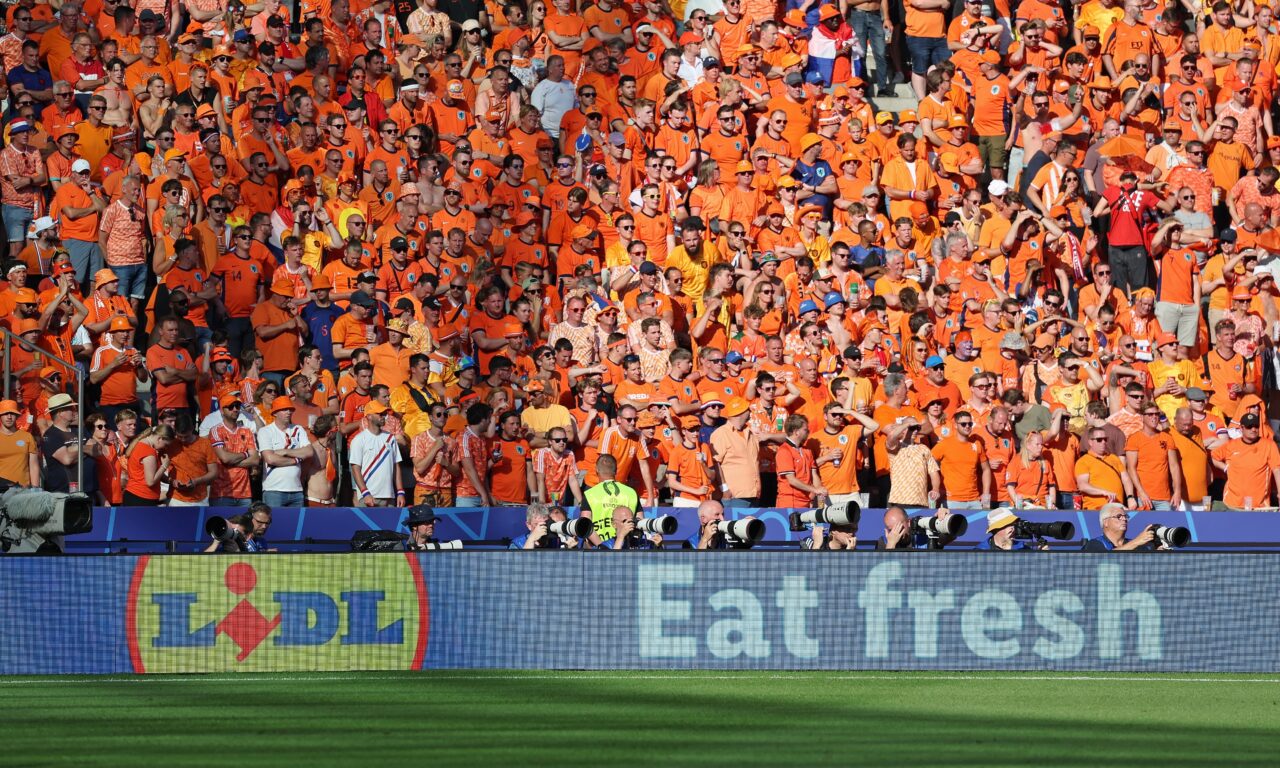
The visibility was there. UEFA competitions put the brand in front of millions of fans across Lidl's core markets. But more importantly, the message landed. "Historically, Lidl began as a fruit and vegetable retailer - this is still our strong identity today," says Ruschke. When Lidl handed out over 120 tons of fresh fruit to fans in the fan zones across EURO 2024 and Women's EURO 2025, it was not a stunt. It was a brand positioning exercise delivered at scale, in a context where it felt completely natural. "We can see that this naturally contributes to our fruit and vegetables being perceived as fresher by people who come into contact with our sponsorship," Ruschke says.
That is the moment most brands stop. They renew the deal on similar terms and run the same activation again. Lidl decided to go further.
A new partnership
The new agreement operates at a different level entirely. Rather than attaching the Lidl brand to individual competitions, the partnership now sits at the organisational level of UEFA as a whole. "We have together defined strong thematic roles with a clear focus on relevance," says Ruschke. In practical terms, that means Lidl is no longer just a visible sponsor. It is a contributor to UEFA's grassroots education programmes, developing content for coaches, teachers and young people around nutrition and sporting performance.
"UEFA, through its grassroots programmes, reaches millions of children across more than 50 national associations," says Ruschke. "Together, we have the power to move society and create real, tangible value."
That is a significant step beyond tournament branding. Through the distribution network of UEFA, LIDL is sending a message it genuinely believes in, delivered directly to key audiences. And it runs until 2030.
A consistent message
There is a temptation in brand marketing to interpret a successful sponsorship as proof that sponsorship works, and then go out and buy more of it. Different properties, different markets, different audiences. More shots at goal.
The problem is complexity. Multiple rights holders means multiple renewal cycles, multiple activation strategies, multiple teams managing multiple relationships. The budget fragments. The message fragments with it.
A single deep partnership with UEFA gives Lidl something more valuable: consistency. One platform, one message, activated coherently across Europe.
The lesson
Lidl's approach will not suit every brand. It requires conviction, budget, and a message worth repeating. But the underlying logic is straightforward and it applies more broadly than most brands are willing to admit.
If you find a sponsorship that works, do not quietly renew it and move on. Understand why it works. Then have the courage to build on it. The brands that get the most from sponsorship are not always the ones with the most partnerships. They are the ones that committed fully to the right one.