
Women’s sport partnerships: Inside CIBC and Sephora’s first season with Toronto Tempo
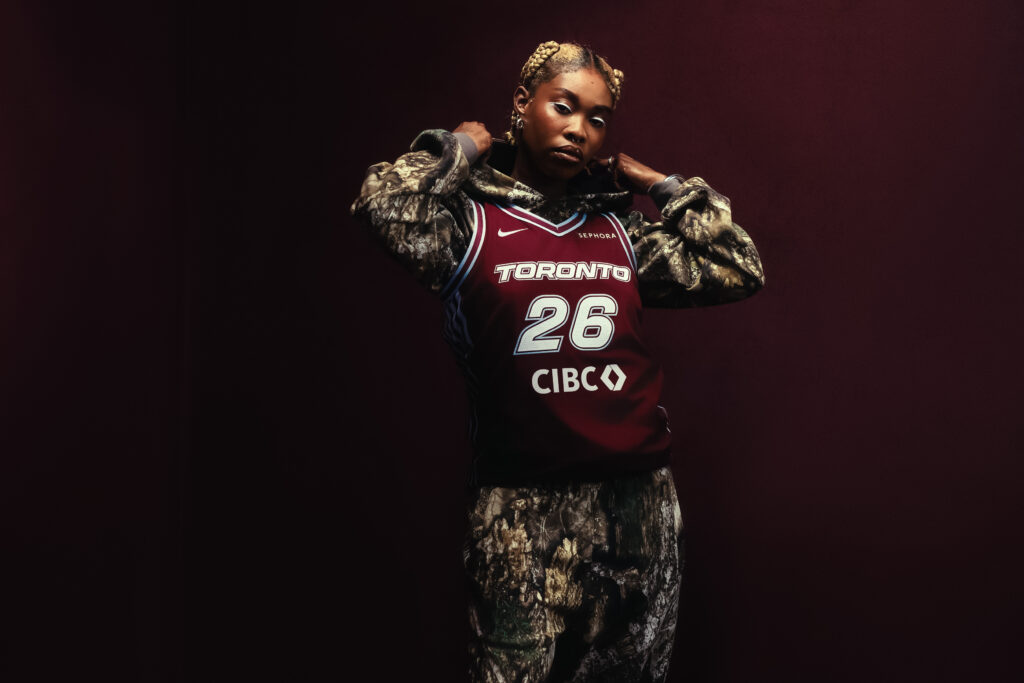
Most brands say they back gender equality, so sponsoring women's sport looks like the easy proof. It isn't. Writing a cheque and posting a line about empowerment doesn't make a partnership authentic.
What women's sport does offer is something far more powerful: the chance to help build something from the beginning. Teams, leagues and competitions are being built in real time, and the sponsors who arrive early have an opportunity to shape them, not just buy into them.
Toronto Tempo, Canada's first WNBA team, is a great example.
CIBC and Sephora both committed well before the team played a game. With the inaugural season almost complete, their experiences show how sponsors can do more than associate themselves with the growth of women's sport.
Make the bet
The safe bet has an established audience and proven returns. The riskier one is usually where the upside sits.
When CIBC and Sephora committed to Toronto Tempo, there were no Tempo fans, no content and no commercial playbook to follow. There was plenty of evidence of a growing appetite for women's basketball in Canada, but both brands were ultimately betting on what the team could become.
CIBC's brand platform is built on ambition, Ambitions Made Real. Tempo's ambition was to build Canada's first WNBA franchise from nothing. CIBC got in early enough to help.
"At CIBC, we believe in backing ambition early, often before it is widely recognised, and Toronto Tempo gave us a credible way to do exactly that," explains Andrew Greenlaw, Senior Vice President, Brand, Community & Client Experience at CIBC.
CIBC did not wait for Tempo to prove its value and then pay to access the fanbase. It backed the ambition and helped build the thing it sponsors.
Sephora was betting on something else: the audience.
"When we first heard that the WNBA was bringing a team to Canada, we knew we wanted to be at the forefront of this pivotal and historical cultural moment," says Allison Litzinger, CMO of Sephora Canada. "We could see the energy and excitement building across the country and believed that Canadians were ready to rally behind the Toronto Tempo as our team."
There is always more risk in getting there first. But if you believe in the direction of travel, waiting for everyone else to prove you right rather defeats the point.

Have something to contribute
Getting there early is one thing. Having something useful to contribute when you arrive is another.
In a recent interview with The Sponsor, Think Beyond's Oliver Meade made the point that identifying an issue that matters is only half the challenge. The question brands need to ask is whether they have a credible role in doing something about it.
That distinction is particularly relevant to women's sport.
A beauty brand sponsoring female athletes is close to the most obvious pairing available. What makes Sephora's Pretty Badass campaign work is that it argues against type rather than with it.
The campaign takes aim at an assumption many female athletes will recognise: that strength and femininity sit at opposite ends of a scale.
"With Pretty Badass, we're challenging the idea that women have to choose between being powerful and feminine, competitive and expressive, athletic and unapologetically themselves," says Litzinger. "Beauty and strength are not opposites. Women can be all of these things, and they shouldn't have to choose."
A beauty brand has an obvious reason to hold that view. Sponsorship is what lets it do more than state it.
The opportunity beyond the court
The commercial opportunity around women's sport is not limited to what happens during the game.
Agencies will talk your ear off about fandom, fancom and whatever the latest buzzword happens to be, but the underlying point is straightforward. Sport creates communities, and the people in them are interested in far more than the result. This is a sentiment echoed by Éric Martin, Director of Sponsorships at BMO, in a recent interview with The Sponsor.
That is pronounced in women's sport, where athletes, fans and the wider community shape the culture of new teams as the sport grows.
Sephora expected Tempo to attract a young and diverse audience broadly in line with the wider WNBA. What has interested Litzinger is how quickly that interest moved beyond basketball.
"What's been particularly powerful is seeing how those assumptions have not only been reinforced and deepened but expanded," she says. "As the fan base continues to grow, that enthusiasm has extended further beyond the game itself. People are connecting deeply with the athletes as individuals, their stories and their self-expression."
That creates a bigger opportunity. But there is an important difference between tapping into a community and helping to grow one.
Pretty Badass has gone beyond Tempo players to bring other athletes and women from the wider community into the campaign. Sephora invited Canadians to nominate a Pretty Badass woman in their own lives, then brought some of those stories into the partnership through social content, courtside experiences and recognition on the jumbotron.
"What's most exciting is how we've been able to turn our audience from observers to active participants," says Litzinger. "It's not just about putting the Sephora logo in the arena. It's about creating opportunities for people to see themselves reflected in what we're doing and feeling like they're part of the conversation."
CIBC has approached the same idea in its own way. Champions of Ambition recognises community leaders changing the game, while Day Ones celebrates the families, mentors and supporters behind individual ambition.
The athletes matter. They are not the whole story.
Both brands are using their sponsorship to pull more people into the world around Tempo and give them a reason to feel part of it. A sponsor that helps grow the audience it paid to reach creates value for both sides of the partnership.
Knowing where to show up
Having something relevant to say does not mean saying it everywhere in exactly the same way.
One of the more practical lessons from Sephora's first season with Tempo is the different role each channel plays.
High-visibility assets like the jersey, TV, out-of-home and transit establish the association and put Sephora alongside one of the most interesting new properties in Canadian sport.
"Social has definitely been one of the strongest drivers of engagement, particularly through our Pretty Badass content series," says Litzinger.
But social does not work in isolation. A fan nominates someone through Pretty Badass. That story becomes content. The person behind it is brought courtside and recognised inside the arena. The experience creates more content and reaches another audience.
"With social and in-arena activations, we can create much more direct engagement with our fans," Litzinger explains. "That's where we can invite people to participate, tell their stories and engage with the brand in a more personal way."
None of these channels is revolutionary on its own. The difference comes from understanding what each is good at and getting creative about how they work together.
The jersey creates visibility. Social opens the conversation. The arena turns that conversation into an experience.
Roundtable Event
CIBC and Sephora took different routes into Toronto Tempo. What worked is the same in both cases.
They committed before there was anything to buy, so they helped shape the property rather than rent it. They brought a view they already held rather than borrowing one from the cause. And they used the partnership to widen the audience around the team, not just to reach the audience already there.
Between them, they have broken through a crowded market and turned investment into impact.
That is the subject of The Sponsor's upcoming Leaders Roundtables in Toronto on 5 November and Chicago on 10 November. Brands-only sessions for sponsorship leaders to debate the approaches working best and peer-review their own strategies with fellow sponsors under the Chatham House Rule.
Attendees from past roundtables include sponsorship leads from Toyota, UBS, Qatar Airways, Deloitte, Kia, Dell, Coca-Cola, DHL and others.
Further information and registration details for both events are available here.