
The great Canadian sponsorship squeeze
There are few things the Commercial Director of a sports team enjoys more than announcing a new sponsorship. So, when a good friend who has spent years managing sponsorships for a major brand recalled the email she had received that morning, sent to her and all the club’s existing sponsors, which read, “Great news, we have a new sponsor joining the club”, her reaction was understandable.
“Great news for whom? Not for me. It’s one more brand I have to compete with, one more brand seeking to capture the attention of the very audience I’ve paid to reach.”
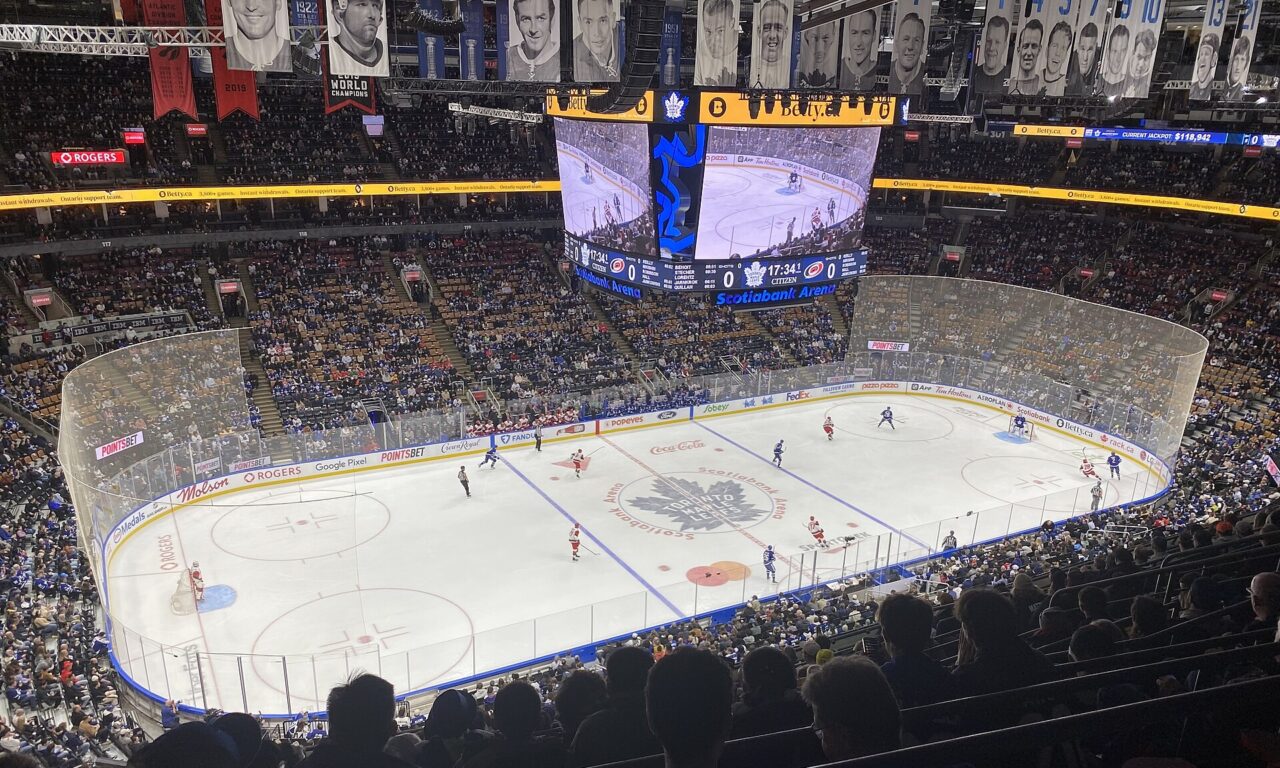
It’s a sentiment many Canadian sponsors may recognise. In 2022 there were eight Canadian sponsors of the NHL trying to reach hockey fans; today that number has grown to 21. Team Canada attracted 10 new brand partners in the last 12 months, while the CFL’s growing partner roster now includes more than 50 brands across its events.
For the agencies and sports properties involved, this is certainly cause for celebration.
Brands are increasingly seeing the impact sponsorship can have on their businesses. Existing sponsors are growing their portfolios while new entrants are coming into the market. Across the country, sponsorship investment has reached a record C$4.22 billion, according to Canadian sponsorship agency T1, with much of that growth coming from new sponsorship.
But what is good news for the industry presents a growing challenge for the individual sponsor.
The number of major sports properties in Canada has not changed substantially. The commercial inventory surrounding them has. Jersey patches, back of shirt, helmet home, helmet away. More brands showing up around live sport, more messages competing for the same fans and a market that is becoming increasingly difficult to break through.
So how do you turn sponsorship investment into impact when everyone else is trying to do the same?

Budget-busting exposure
One solution to sponsorship clutter is simply to own more of the clutter than anyone else.
It is difficult to watch or attend live sport in Canada without quickly encountering Rogers, Tim Hortons and a handful of other major sponsors. These brands employ many of the effective sponsorship strategies outlined below, and often do them very well. But they also enjoy an advantage unavailable to most: the budget to build portfolios that make them almost impossible to miss.
For most sponsors, however, this is not a realistic strategy. They have to find other ways to earn attention.
Creativity as the differentiator
In a crowded sponsorship landscape, many would argue that creativity is perhaps the only true differentiator.
There are varying estimates of how many ads or logos the typical person sees in a day but, let’s just say, it’s a lot. For a sports fan, more so.
Advertising has long recognised that buying exposure is only part of the challenge; the creative determines whether anybody notices it. Sponsorship is no different.
Of course, some of the best ideas require significant budgets to bring them to life. But putting 10 Formula 1 drivers into life-sized cars built brick by brick from LEGO and racing them around Miami is not simply a matter of financial brawn. There are some serious creative brains at work to capture global attention in that way.
This is perhaps the greatest untapped opportunity in Canadian sponsorship.
In a saturated market, fans have seen the competitions, T-shirt cannons, ticket giveaways and branded fan zones. These activations can still work, but when everyone is drawing from the same playbook they become increasingly difficult to use as a means of differentiation.
There are notable Canadian exceptions.
Molson’s ‘See My Name’ campaign is one that sticks in my mind. Building on its support for women’s hockey, Molson recognised that the longer hair of many PWHL players obscured their names on the back of their jerseys. Its solution was to move the players’ names and put its own brand in the position most likely to be obscured.
At a time when sponsors are fighting for greater visibility, Molson earned attention by making itself less visible.
Simple, distinctive and different from almost everything around it. That is creative sponsorship activation.
Purpose as the essence of your brand and sponsorships
“People equate purpose often with social marketing and cause marketing—making the world better. Well, maybe it can lead to that, but purpose starts with the essence of your brand. What is the impact your brand is trying to make in the lives of the people it serves?”
— Jim Stengel, former Global Marketing Officer, P&G
Cannes Lions is perhaps a little far to travel for most Canadian marketers, particularly those on the West Coast, but those who did make the journey this year witnessed a fascinating and, frankly, long-overdue debate about purpose.
Former P&G Global Marketing Officer Jim Stengel argues that brands have turned away from purpose because too often they have failed to connect it to the balance sheet. The same criticism can be levelled at sponsorship.
Purpose does not have to mean attaching a brand to an unrelated social cause. It can start much closer to home: what positive impact does your organisation make through the products and services it provides?
Brands that understand that impact can use sponsorship to amplify or extend it. Done well, the result is not only more authentic but considerably harder for a competitor to replicate.
In this area, Canadian sponsorship has some excellent examples.
Canadian Tire sells bikes, skates and other sports equipment. At its simplest, the business helps people participate in sport. Through its ‘Big Play’ hockey partnership, Canadian Tire helped extend that benefit to 30,000 children who might otherwise have been unable to participate.
That is positive social impact directly connected to the company's core business.
The fundamental service BMO offers is investment for growth. Its long-standing investment in Canadian soccer therefore offers another interesting example: using sponsorship not simply to associate the BMO brand with the sport, but to demonstrate how investment can help communities, organisations and individuals grow.
These are not oil and gas companies sponsoring an art exhibition to provide some good in exchange for the bad. The purpose is not bolted onto the partnership. It is rooted in something the organisation actually does.
When that connection is authentic, sponsorship can do more than communicate purpose. It can demonstrate it.
Longevity over greener grass
Sponsorship value compounds over time. Yet incoming brand and marketing leaders often feel pressure to make an impact and, in doing so, replace existing partnerships with new properties or entirely different marketing approaches.
Speaking at The Sponsor’s Sponsorship Masters event in June, Kia Marketing Director Steve Hicks argued that the role of a great marketing leader can sometimes be that of a steward rather than a change maker.
That does not mean allowing long-standing partnerships to become stale. Quite the opposite. The challenge is to keep finding new ways to activate them while allowing years of accumulated association to continue working for the brand.
Canada provides one of the clearest illustrations.
Scotiabank Arena once had another name. For almost 20 years it was the Air Canada Centre. Today there are younger fans for whom Scotiabank Arena is simply what the building is called, just as generations of cricket supporters in Britain have grown up knowing Surrey’s home ground as the Kia Oval.
That kind of association cannot be bought overnight.
For existing Canadian sponsors, the greatest opportunity may therefore be not the greener grass of a new partnership, but continuing to invest in and enhance the one they already have.
Opportunity does not equal attention
The uncomfortable reality is that the Canadian sponsorship squeeze is only likely to get tighter. Rights holders will continue creating inventory and new brands will continue entering the market. Every new sponsor means another company competing for a finite amount of attention.
That does not mean the opportunity for sponsors is diminishing. Duncan Fraser of sponsorship agency XMC, points to new leagues, emerging sports, women’s sport, cause and cultural platforms as evidence of an expanding sponsorship landscape.
But greater choice does not solve the problem of attention.
“More places to invest doesn’t make it easier to stand out,” says Fraser. “Ultimately, as investment in sponsorship grows, the question isn’t only which property a brand should buy. It’s what right the brand has to be there, what it can uniquely contribute, and whether it can turn that role into something people can care about. That is where true breakthrough happens.”
For those with the budget, one answer is to be everywhere. For everyone else, the challenge is more interesting: do something distinctive, build sponsorship around something that genuinely belongs to your business, or stay long enough for the association to become your own.
Buying the sponsorship gets you access to the audience. It does not guarantee their attention.
That part is still up to you.
Testing your strategy
Peer reviewing your sponsorship strategy with those facing the same challenges can be one of the most effective ways to identify where it can be improved.
On 5th November, The Sponsor will host a brands-only roundtable for sponsorship leaders in Toronto. Similar sessions in London, Zurich, Chicago and Dubai have brought together those charged with turning sponsorship investment into impact from brands including DHL, Toyota, Deloitte, UBS and Dell.
Further information and registration details for the Toronto edition are available here.